Why Healthcare Providers Need Android Apps
Meeting Growing Patient Expectations
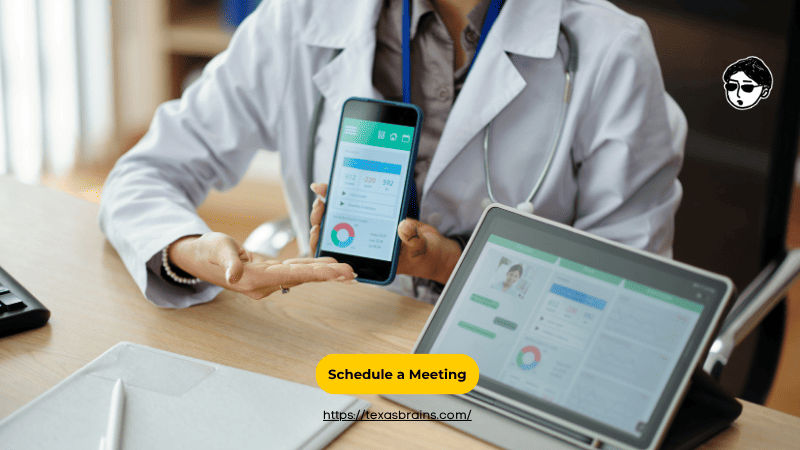
Modern patients demand instant access to their health metrics, appointment booking, and direct clinical communication. If your practice or startup relies on manual phone lines or outdated web portals, a significant segment of high-value consumers will migrate to tech-forward competitors.
Improving Access to Healthcare Services
An app removes the physical boundaries of care, allowing patients in remote areas to securely send data, update medical history, and complete virtual follow-ups without step-by-step frictions.
Supporting Digital Transformation in Healthcare
Outdated paper trails and fragmented desktop legacy tools increase human error. Shifting to an optimized mobile framework automates tracking, minimizes administrative bottlenecks, and ensures accurate data delivery right at the point of care.
Why Android Has a Large User Base in the U.S.
While premium hardware exists across ecosystems, Android platforms dominate a massive share of the corporate, logistics, and consumer hardware market in the United States. From specialized rugged medical tablets used in local Texas clinics to consumer mobile health technology, developing an Android App Development for Healthcare in the United States ensures your medical software solutions reach the exact audience needing them.
What Is Android Healthcare App Development?
Understanding Healthcare Mobile Applications
This specialized discipline involves designing, engineering, and launching native software explicitly crafted for medical environments, hospitals, and patients. It requires profound technical capabilities and specific insights into medical compliance rather than generic software development methods.
Types of Android Medical Apps
Patient Portals: Direct access to labs, billing, and scheduling.
Clinical Workflow Software: Internal communication, task dispatching, and secure messaging tools for doctors.
Diagnostic & Diagnostic Support Tools: AI-driven imaging readers and remote check-ins.
Key Goals of Healthcare App Development
Zero-Downtime Reliability: Applications must operate flawlessly under high-stress conditions.
Maximum Security Standards: End-to-end data encryption must be implemented to keep records private.
Intuitive Interfaces: Designs must clear confusion immediately, especially during critical medical events.
How Mobile Technology Improves Patient Care
By keeping a direct link active between the patient and the care team, clinical efficiency climbs. Real-time updates prevent missed medication dosages, allow early warning signs to surface, and reduce hospital readmissions drastically.
Types of Android Healthcare Apps
| App Type | Primary Objective | Key Integration |
| Telemedicine & Virtual Care | Real-time secure video consults | WebRTC, Interactive Calendars |
| Appointment Scheduling | Reduce no-shows, automate booking | EHR Synced Scheduling Systems |
| Electronic Health Record (EHR) | Mobile-optimized record updates | Fast Healthcare Interoperability Resources (FHIR) APIs |
| Remote Patient Monitoring (RPM) | Live data tracking from home devices | Bluetooth Medical Wearables |
| Medication Reminders | Improve patient compliance | Low-latency Push Notifications |
| Fitness and Wellness Applications | Preventative health tracking | Google Health Connect, Wearable Devices |
Deep-Dive into Digital Health Apps
Essential Features of Healthcare Android Apps
Secure Patient Registration and Login: Multi-factor authentication paired with biometrics keeps entry simple yet incredibly safe.
Appointment Booking and Calendar Management: Real-time updates sync directly across provider networks.
Video Consultations: Low-latency, crystal-clear visual calls engineered for low-bandwidth scenarios.
Electronic Medical Record Access: Quick, encrypted patient portal retrieval for authorized personnel.
Push Notifications and Medication Reminders: Personalized alerts that prompt action without annoying the user.
In-App Payments and Insurance Integration: Secure financial gateways that process claims and payments accurately.
Patient Messaging and Chat: Fully secure messaging channels to maintain direct communication loops.
HIPAA Compliance and Data Security
Protecting Patient Health Information
Data leaks do not just damage reputation—they trigger heavy financial and legal penalties from regulatory bodies. In the United States, keeping Protected Health Information (PHI) secure is mandatory.
Secure Authentication and Access Control
Role-based restrictions ensure that only the assigned public sector official, doctor, or verified patient can view personal medical files.
Data Encryption and Secure Storage
Every piece of data must remain fully encrypted both while sitting on the cloud server and when moving across networks to mobile devices.
Audit Logs and Compliance Monitoring
Every click, view, and alteration must create an unchangeable trail to guarantee accountability during public sector or national program reviews.
Android Technologies Used in Healthcare Apps
Kotlin for Native Android Development: The modern, robust gold standard for stable, crash-free, and high-performance native systems.
Java-Based Healthcare Applications: Essential for maintaining and migrating robust enterprise frameworks and legacy tools.
Cloud Infrastructure Integration: High-scale, compliant cloud networks like AWS or Google Cloud ensure zero downtime.
API Connectivity With Healthcare Systems: Utilizing modern APIs ensures seamless communication across pharmacies, insurance networks, and hospitals.
AI and Machine Learning Integration: Powers predictive analytics to track subtle shifts in patient vitals before emergencies strike.
Benefits of Android App Development for Healthcare
Better Patient Engagement
Interactive features give users total clarity over their health records, helping them stay active in their recovery programs.
Improved Clinical Efficiency
Removing repetitive manual text and forms frees up medical staff; optimization allows clinicians to focus purely on actual care.
Faster Communication Between Patients and Providers
Secure systems replace phone tags, letting stakeholders swap critical updates instantly.
Reduced Administrative Workloads
Healthcare automation eliminates manual filing, saving thousands of operational hours annually.
Scalable Digital Healthcare Solutions
Custom code evolves alongside your medical business, avoiding the rigid limitations found in generic software platforms.
Why Invest in Android Healthcare App Development?
Building an elite mobile presence establishes your business as an industry thought leader. It improves clinical outcomes, maximizes daily operational efficiency, and builds deep long-term trust with your clients. Rather than settling for cheap, generic templates that risk data exposure, choosing a dedicated partner ensures your digital platform reflects true premium quality.
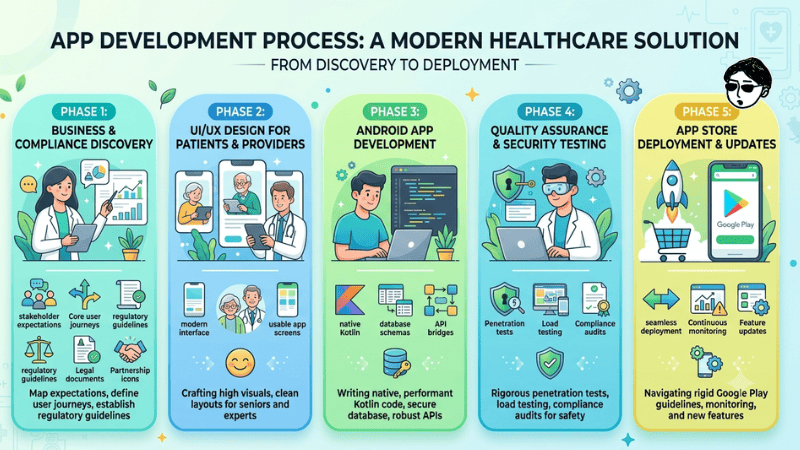
Healthcare App Development Process
Common Challenges in Healthcare App Development
| Core Challenge | Operational Threat | The Strategic Engineering Solution |
| Meeting Regulatory Requirements | Navigating complex federal laws without stalling development cycles. | Deploying automated compliance checking tools and reusable, pre-certified code modules. |
| Integrating With Existing Healthcare Systems | Overcoming the technical friction of syncing modern apps with old, rigid hospital databases. | Building custom middleware layers and using modern, secure healthcare APIs. |
| Managing Sensitive Patient Data | Keeping data storage tightly sealed against evolving global cybersecurity threats. | Architecting end-to-end AES-256 encryption systems with biometric access controls. |
| Ensuring High Performance & Reliability | Preventing application crashes during critical emergency telemedicine video calls. | Engineering lightweight native architectures with automated failovers. |
| Ensuring User Adoption | Designing systems that non-technical patients or busy clinicians reject due to complexity. | Creating simplified interfaces that require zero training manuals. |
Conclusion
If you are ready to stop wasting budget on generic, low-performing web design, let’s talk. Contact our senior engineering team today to map out an automated, intent-driven platform built explicitly to capture high-ticket contracts.
Disclaimer
The information provided in this article is for operational and strategic educational purposes only and does not constitute formal legal or regulatory advice. Please consult with certified compliance experts regarding your specific healthcare software requirements.
References
Disclaimer
Pricing estimates are based on 2026 market averages in San Francisco and Texas and are subject to change based on specific project requirements.